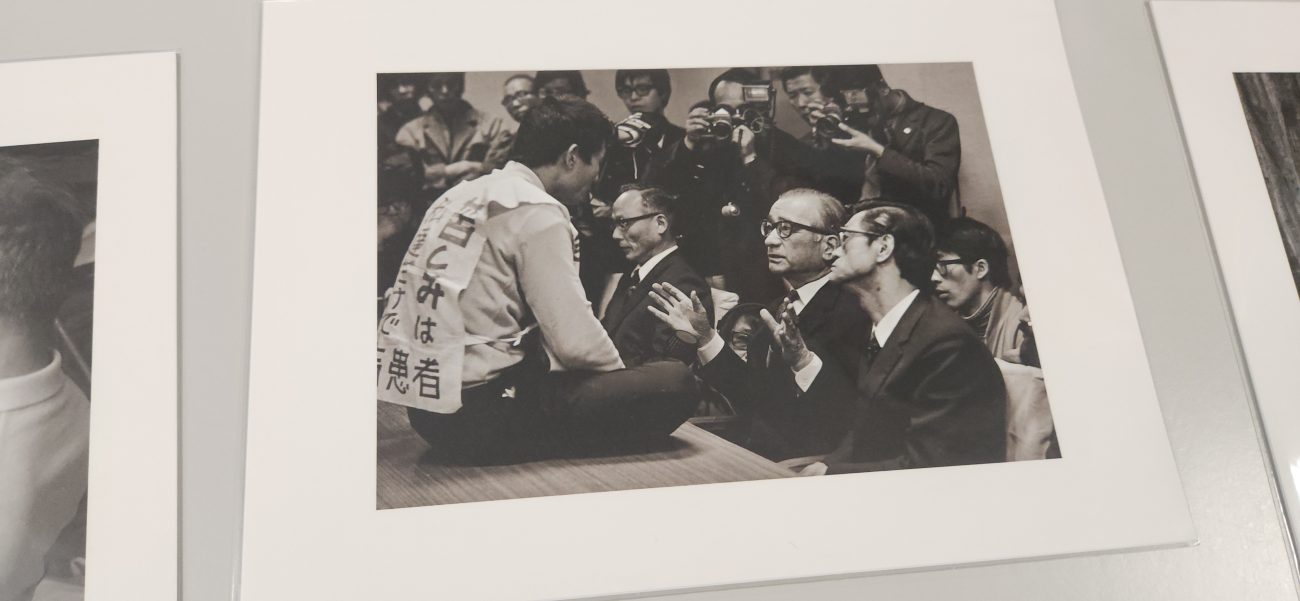
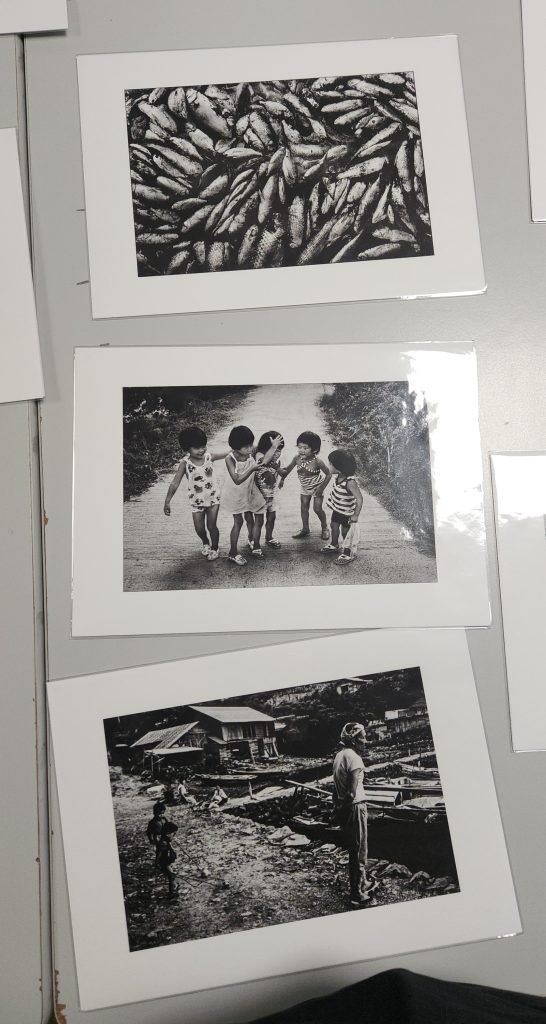
Minamata, a coastal town in Kumamoto Prefecture in the Kyushu region of Japan, has become infamous for the severe industrial mercury poisoning disaster caused by Chisso Corporation that started unfolding in the 1950s . In the early 1930s and for about 30 years, Chisso, discharged its wastewater with toxic methylmercury into Minamata Bay which caused neurological damage, severe sickness and death as well as severe congenital disabilities for tens of thousands of people in the bay area and its surroundings.[1] The damage not only affected individuals and communities but also had a lasting impact on the local ecosystem and wildlife.[2] Other than devastating effects on the local cats, flocks of sea birds and the marine population, communities in and around Minamata had to deal with economic collapse, social stigma and a massive fight that is still in many ways ongoing against both Chisso Corporation itself and the Japanese government that has been complicit.[3] The contaminated wastewaters turned food into poison, the bay into a cemetery of wildlife and Minamata into a disease. I ask in this reflection, what happens when industries supported by the state, tasked with producing economic prosperity, do so through damaging and destroying people’s bodies, our environment, fauna and flora?
Economic development is generally narrated through what it produces: jobs, industries, national wealth and economic growth. The Minamata case asks us to look at what economic development consumes and destroys in order to produce this prosperity. Even though Chisso Corporation produced chemicals essential to Japan’s industrial development, its production also produced poisoned fish, contaminated water, neurological disease and death. The damaged environment and damaged bodies were not produced separately to economic prosperity; rather, they were the direct cost of this prosperity. These costs are often irreversible and long lasting; furthermore, they are moved around and consumed by all of us through ocean water movement, through wildlife contamination, the farming, the rain and the food that we eat. These costs, with massive effects on human life and everything around it, cannot be remedied or reversed. The social and psychological damage carried by communities around Minamata Bay is being felt for generations. This leads me to the question: who pays the price for prosperity?
Chisso Corporation, a major chemical producer in Japan, started operating in Minamata in the early 1900s. Its role was enormously important not only for the local economy but also for Japan’s broader industrial development. Minamata disease, which is a contamination rather than a disease, was officially identified in 1956, but the government did not reveal that the contamination was caused by industrial pollution or order Chisso to stop until 1968, and victims were only able to sue Chisso in 1973. Chisso continued to produce acetaldehyde for 12 years after the contamination disease was officially identified, and continued to dump wastewater in a different locationthe Minamata river–rather than eliminating contamination. It was for the benefit of the Japanese government to keep the corporation functioning in the region. Tens of thousands of people from the region received some amount of compensation by 2023. Approximately one and a half million cubic meters of mercury contaminated sludge was dredged and contained, creating 58 hectares of reclaimed land in an effort to contain the contamination. At the height of its production, Chisso was Japan’s largest producer of acetaldehyde and controlled around 85 per cent of the domestic octanol market, two of the most important chemicals that supported Japan’s post-war’s economic prosperity. In 2011, Chisso established a new subsidiary called JNC Corporation in order to separate its commercial operations from its Minamata compensation obligations.
When corporations function with the support of governments and loose regulation, they turn food into poison and the environment into a hostile polluted and uninhabitable place to live. What happens when the corporation responsible for destroying a community is essential to the national economy? The case of Minamata is very compelling. It teaches us about how much damage corporations can do with the help and support of governments; however, this case is not by any means exceptional.
In Onsan, South Korea, rapid heavy industrialisation in the 1970s severely polluted air, water and agricultural and fishing environments. By the early 1980s, like Minamata, residents developed illnesses that became known as the “Onsan disease”. The government’s main response was relocating thousands of residents, contesting the contamination’s bodily consequences.[4]
In Witenoom, Colonial Sugar Refining Company (CSR)/Australian Blue Asbestos’s operations in Boorloo, Western Australian, between 1940s to 1966 exposed the workers and the inhabitants of the area to asbestosis causing mesothelioma and other diseases. Like Minamata, the asbestos waste contaminated the town and surrounding environment, with residents struggling with asbestos related diseases which continued to appear decades after the mine had closed. The industrial landscape of the mines became a continuing source of bodily harm long after production ceased.[5]
In La Oroya, Peru, a metal smelting corporation since 1922 contaminated the surrounding environment with lead, arsenic, cadmium and sulphur dioxide emissions while residents, particularly children, experienced extremely high levels of toxic-metal exposure. As in Minamata, the community in La Oroya, economically dependent on the major industrial operation found that the same industry was contaminating the town’s air, soil and bodies generating a prolonged struggle over health, evidence and responsibility. Not until 2023 did the inter-American Court of Human Rights find the government of Peru responsible for failing to protect residents from the pollution. Like the case of Minamata, it also raises questions about state responsibility for failing to regulate and permitting the exposure and the harm to continue for decades.[6]
Similar histories can also be told in Kabwe, Zambia where industrial contamination from lead and zinc mining affected communities and mainly children.[7] Casale Monferrato in Italy, where the Eternit corporation contaminated the town and surrounding region with asbestos with people and communities developing asbestos related diseases. The devastating phosphate mining in Banaba is another pertinent example. Phosphate extraction which helped produce agricultural prosperity in so called Australia and Aotearoa consumed and destroyed the land, leaving an extraordinarily damaged landscape and contributing to Banaban displacement.[8] In all these cases, the environmental damage and human cost have been insurmountable. The Minamata community along with people who witness each of these corporation-caused disasters are humanity’s witness to how much damage economic prosperity can cost.
My reflections on this issue does not provide any answers but rather asks us to think about and question what is behind economic development, industrialisation, and who is paying the price? Who bears the cost of industrial modernity? Whose bodies and lands are considered expandable in the pursuit of economic development? What does responsibility mean when environmental damage cannot simply be reversed? The case of Minamata reveals how industrial modernity is produced on the backs of particular bodies and lands, leaving communities to live with environmental and bodily damage long after corporations and governments have enjoyed the benefits of development.
Furthermore, the names attached to these industrial catastrophes are overwhelmingly the names of the communities that suffered from it. This distorts the politics of memory, the damaged places become synonyms with disease while corporations and governments can close down, change and be less visible. The names of these disasters should be shifted to mirror the names of the corporations rather than the name of the towns and villages from where blood and bones are expended. Why not the Chisso disease?
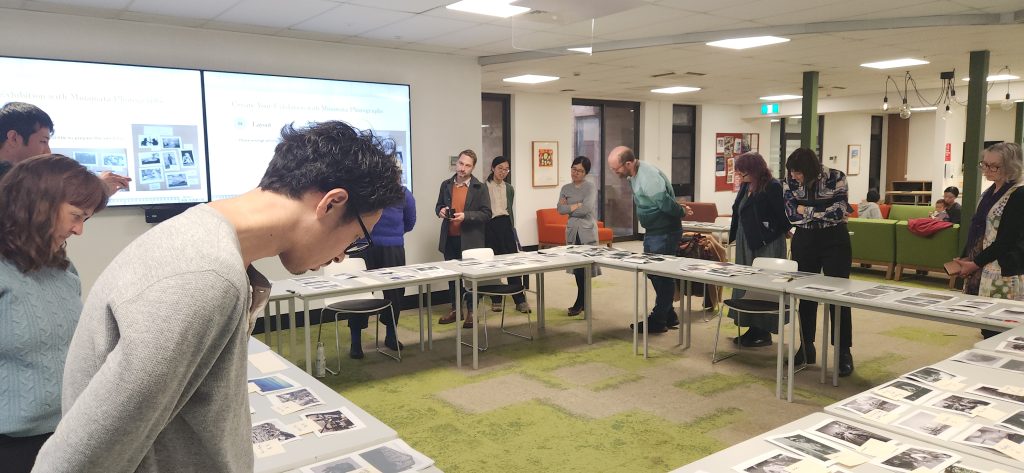
This reflection stems from an archival photography workshop run by two amazing coordinators from the Minamata Photographers’ Eye (MPE) Project on the 6th of July 2026 at Wollongong University on the traditional land of the Dharawal people, at the base of Djeera. Always was Always will be Aboriginal Land. With deep respect to the people of Minamata and surrounding region for their struggle and continued resistance.
[1] Officially certified patients number far fewer, although much larger populations have sought or received various forms of relief. Better to avoid a specific number here unless you explain the contested recognition process.
[2] Ministry of the Environment, Government of Japan, Minamata Disease: The History and Measures (Tokyo: Ministry of the Environment, 2002), chap. 1.
[3] In 2004 the Japanese Supreme Court held both the national government and Kumamoto Prefecture responsible. Supreme Court of Japan, Second Petty Bench, October 15, 2004, Case No. 2001 (O) 1194, Minshu 58, no. 7, 1802. “Judgment that Held That the Failure of the National Government to Exercise the Authority to Enforce Regulations under the Water Quality Laws … Was Illegal”
[4] Jihye Yang, “Rewriting the Economic Growth History of Korea in the 1970s: Focusing on the Pollution Imports and the Shadow People of Economic Growth,” International Journal of Korean History 28, no. 2 (August 2023): 53–100.
[5] A. W. Musk et al., “Wittenoom Legacy,” International Journal of Epidemiology 49, no. 2 (2020): 467–476.
[6] Matthew K. Reuer et al., “Lead, Arsenic, and Cadmium Contamination and Its Impact on Children’s Health in La Oroya, Peru,” International Scholarly Research Notices 2012 (2012).
[7] Daichi Yamada et al., “Assessing the Population-Wide Exposure to Lead Pollution in Kabwe, Zambia: An Econometric Estimation Based on Survey Data,” Scientific Reports 10 (2020).
[8] Katerina Martina Teaiwa, Consuming Ocean Island: Stories of People and Phosphate from Banaba (Bloomington: Indiana University Press, 2015).
