TV Documentary on PFAS Contamination and Militarism in Okinawa
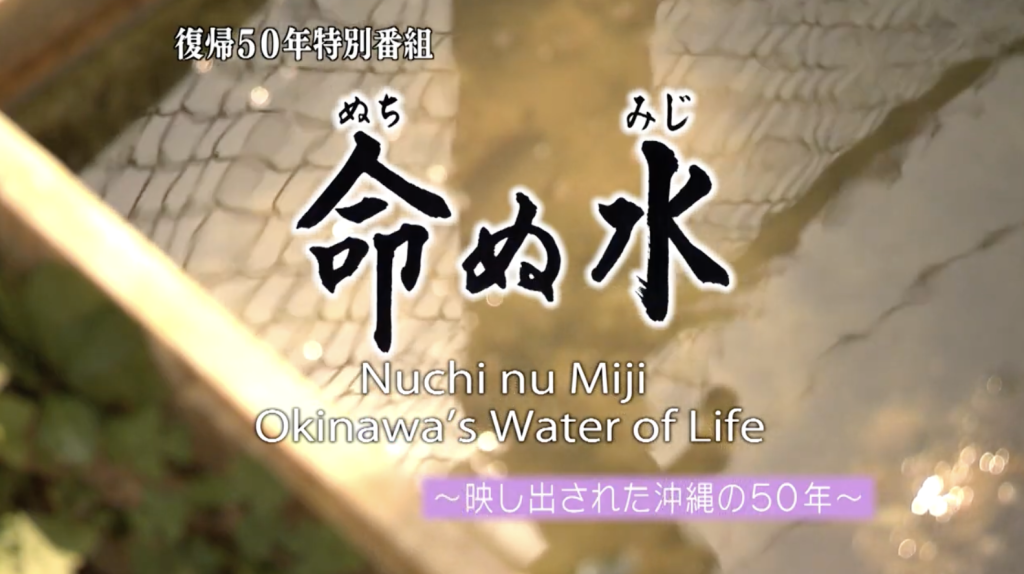
Nuchi nu Miji (Water of Life),” a TV documentary created by QAB (Ryukyu Asahi Broadcasting Corporation) in 2022, received an honorable mention at the 2023 Galaxy Awards as one of the best television programs of the year. This program was by no means a short-term project. The director of the program, Natsuko Shimabukuro, and her team have been covering this issue daily for more than 10 years.
“Nuchi nu Miji” portrays the history of people’s struggles for justice in one of the worst environmental crises in Okinawa.
The Ryukyu Islands are an archipelago formed from uplifted subtropical coral reefs. Since they are surrounded by the sea, people often imagine them as being located by the water. In reality, however, these flat islands lack major rivers, and prior to the construction of artificial dams following the Reversion, these islands faced harsh natural conditions characterized by recurring droughts and frequent major typhoons. Since ancient times, people have relied on “spring water,” namely, fresh water stored in aquifers deep within the earth beneath uplifted coral reefs. The limestone formed from these uplifted coral reefs acted as a natural filter, providing this precious, life-sustaining water: “Nuchi nu Miji.” For this reason, since the days of ancient Ryukyu, spring water places have been sites of worship of local religious beliefs, and even today, there are people who continue to use this water.
It is easy to assume that the development of dams and water and sewage systems in Okinawa—both after Japan’s annexation of the islands and under U.S. military administration following World War II—was carried out, so to speak, by the ruling authorities. However, in terms of securing fresh water, the role of pumping water from underground aquifers remains significant even today. In this sense, it was the local people of Okinawa who actually possessed the knowledge regarding those aquifers, not the ruling authorities who came from outside.
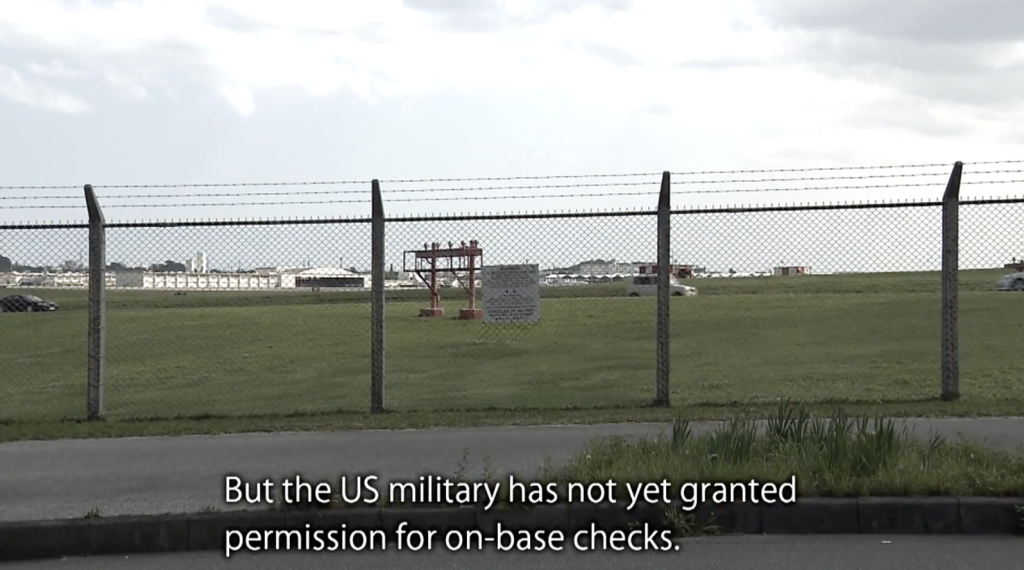
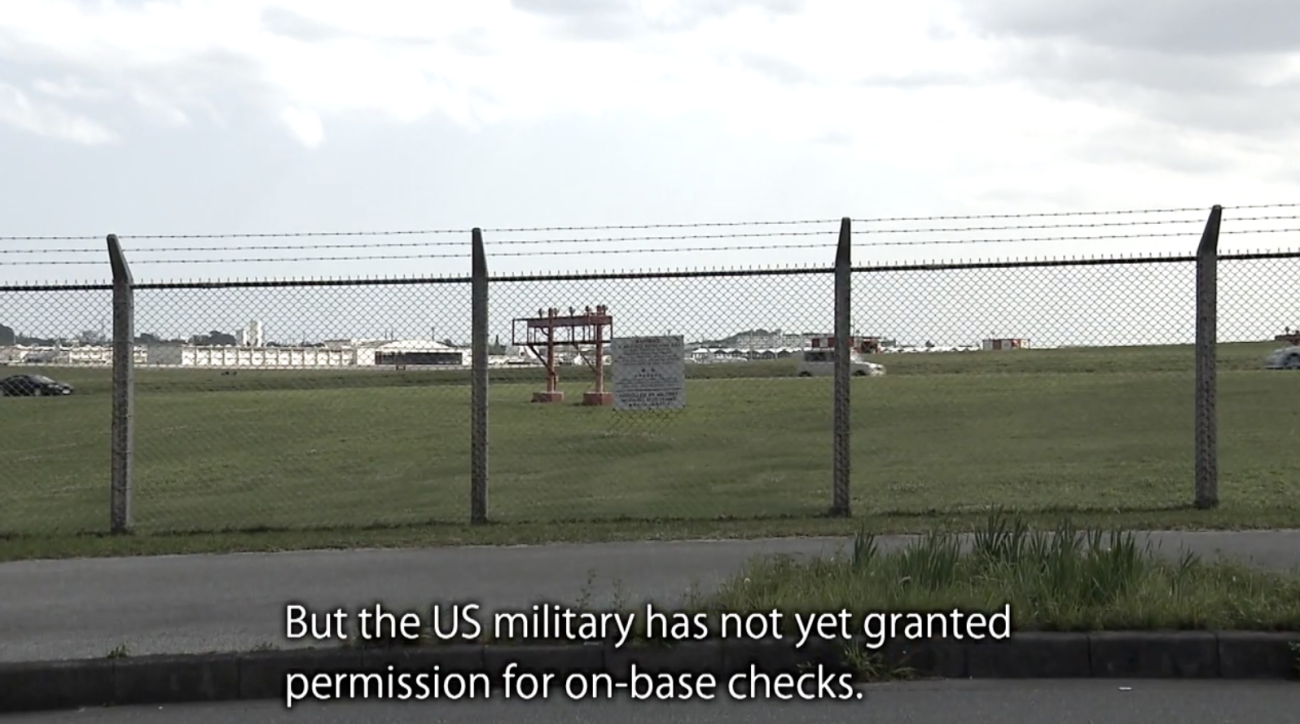
In January 2016, the Okinawa Prefecture announced that high concentrations of PFAS, also known as “Forever Chemicals” that are considered carcinogenic and would cause various health problems, had been found in the water sources (rivers and wells) of the Chatan Water Plant. Water contaminated with PFAS is supplied to approximately 450,000 people in seven municipalities, equivalent to roughly one-third of Okinawa Prefecture’s total population. In particular, high concentrations of PFAS contamination continue to be recorded in areas surrounding U.S. military bases, such as Kadena Air Base and Futenma Air Station. This is because PFAS-based foam fire extinguishers are used on a continuous basis within the base, either as part of training or in the event of specific incidents. However, despite repeated requests from the Okinawa Prefectural Government, the U.S. military has refused to allow an investigation into the cause of the incident, and the Japanese government continuously maintains a passive and ambiguous stance. To this day, the U.S. military has been ignoring the PFAS contamination issue, and the Japanese government reluctant to intervene; as a result, the Okinawa Prefectural Government has had to independently implement its own water purification system to protect residents and ensure a safe drinking water supply.
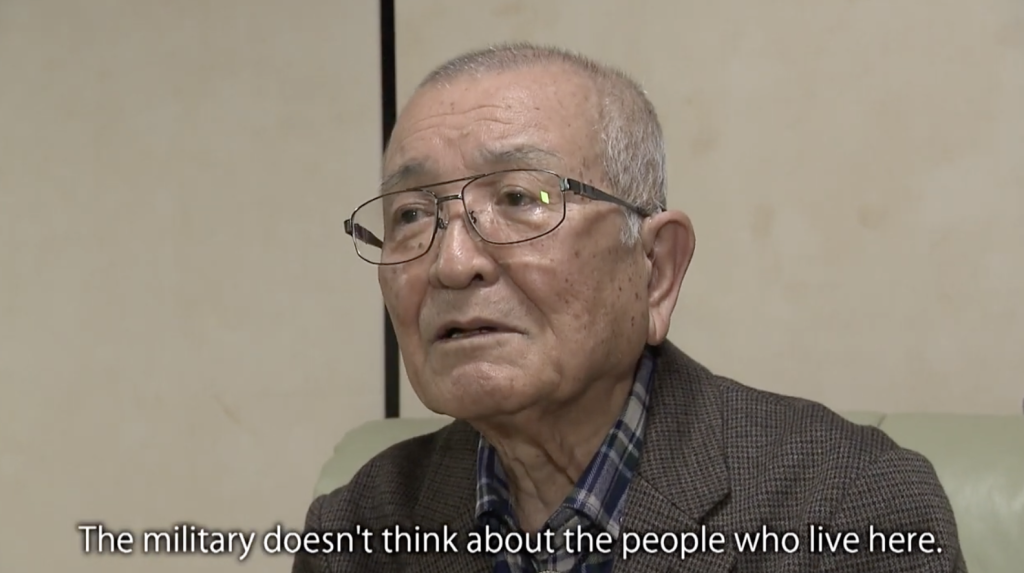
Director Shimabukuro and her team have been investigating the destruction of nature and pollution caused by U.S. military bases for many years, including the issue of Agent Orange contamination. Regarding the PFAS contamination, through a joint investigation with journalist John Mitchell, the team has uncovered the truth by examining U.S. military documents under the U.S. Freedom of Information Act.
Tomokazu Takamine, an Okinawan journalist renowned for his expertise in reporting on U.S. military base issues, who also served as Ryukyu Shimpo’s president, once said that reporting the base issues in Okinawa every single day must be investigative journalism, because the truth is always in the blackbox, and the U.S. authorities tell us nothing. Director Natsuko Shimabukuro and her team have been conducting exactly this kind of daily investigative reporting in Okinawa. As a result, they have come closer than ever to uncovering the invisible pollutants known as PFAS—which cause serious damage—and their sources.
The end result is “Nuchi nu Miji,” a documentary that interweaves an investigation based on U.S. military documents with in-depth interviews with scientists, residents, and prefectural officials involved in water policy since the U.S. military occupation. The 70-minute documentary demonstrates the modern and contemporary history of water in Okinawa, as well as the new base problems of the 21st century, an issue that deserve continual attention and struggle.
